Summary
For years, the conversation about our relationship with technology has focused on screen time. We count the hours we spend on our phones, worry about how often we check them, and look for ways to disconnect. That approach misses something important. An hour spent reading, talking to a friend, watching a film, learning a skill, or moving through an algorithmic feed all count as screen time, even though they are very different experiences.
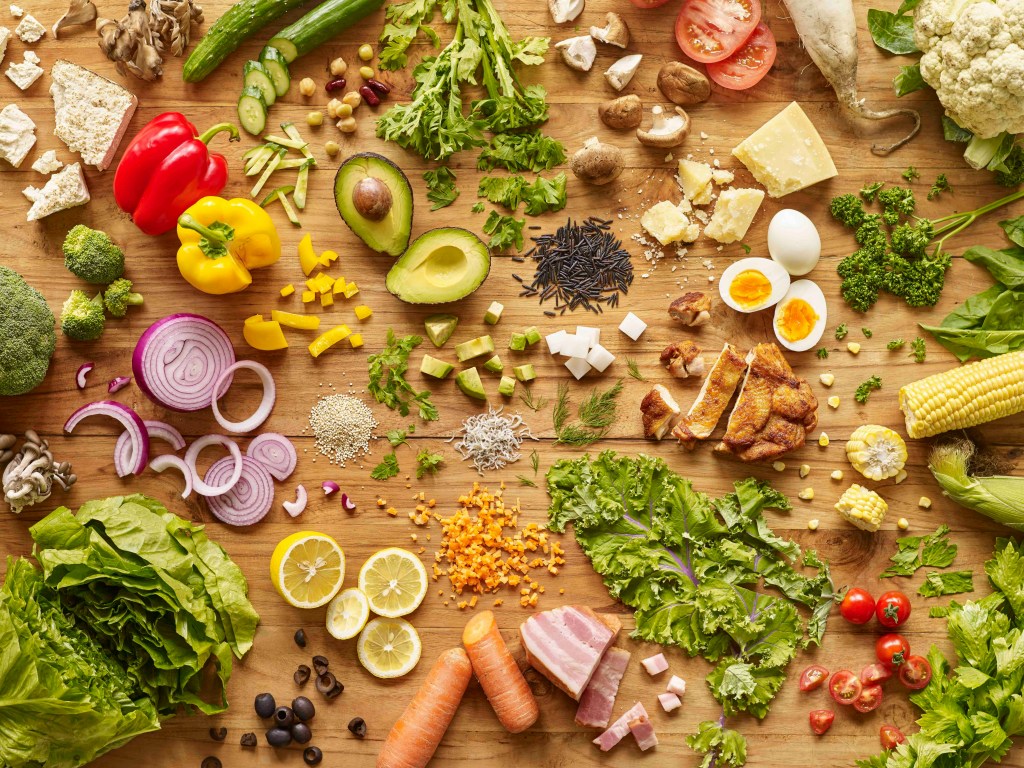
A better way to think about digital life may be through the idea of a media diet. Like a food diet, a media diet describes what we consume, how much variety we get, where it comes from, and how deliberately we choose it. It gives us a way to think about the quality and composition of our media consumption alongside the amount of time we spend consuming it.
That idea could also matter for the future of websites. Over the past 15 years, much of the internet has moved away from destinations people deliberately visit and toward feeds that bring a continuous stream of information to them. AI is taking that shift further by answering questions without always requiring people to visit the original source. If people become more selective about where they place their attention, websites may have a new opportunity to become places people choose to visit rather than pages they happen to land on.
The problem with screen time
In August 2026, It’s Nice That introduced Good Screens, a research project exploring how technology might serve people without constantly demanding their attention. [1] There is an appealing idea here. After years of adding features, notifications, feeds, and screens to everyday life, perhaps good technology should sometimes know when to disappear.
Taken too far, though, that idea runs into something much older than the smartphone. Human beings have always wanted their attention captured. Long before digital media, people sought out spectacle, gossip, stories, games, music, beauty, novelty, and other people. A great film can hold someone’s attention for three hours. A football match can occupy an afternoon. A child can spend an hour watching insects in a garden. Becoming absorbed in something is part of ordinary human life, which makes reducing attention a poor goal on its own.
Screen time has a similar problem. Five hours on a laptop can mean five hours of work. An hour on a phone can mean talking to a parent, reading the news, editing photographs, watching TikTok, or doing all four. The device and the number of minutes tell us relatively little about the value of what happened during that time.
Research supports a more nuanced view. Studies of social media and adolescent mental health have produced mixed results, suggesting that time spent online alone tells us little about whether an experience is helpful or harmful. [2] The American Psychological Association similarly argues that outcomes depend on the person, the content, and how social media is used, and recommends teaching social media literacy alongside setting limits. [3]
This points toward a more useful question. What are we putting into our attention during the hours we spend with media?
Food went through its own version of this problem
There is a useful parallel in the history of food. Industrial food solved genuine problems by making products easier to transport, store, prepare, and sell at scale. It also created an environment in which highly processed food became widely available, heavily marketed, competitively priced, and easy to consume. Health Canada notes that the growth of convenient, highly processed products has changed eating patterns and made food skills more important. [4]
Over time, the cultural conversation around food became more sophisticated. People learned to read labels and pay closer attention to ingredients and processing. Whole foods, organic food, local food, and farm-to-table dining offered different ways of thinking about quality and provenance. These ideas became part of health culture, but also part of lifestyle and identity.
Canada’s Food Guide reflects this broader understanding of eating. It encourages people to think about what they eat as well as where, when, why, and how they eat. It talks about variety, cooking, food labels, marketing, enjoyment, and mindful eating. [5] The result is a model that allows pleasure and health to coexist. A healthy diet can include food eaten simply because it tastes good. What matters is the larger pattern.
Our relationship with media may need a similar vocabulary.
Media has become industrialized too
The internet did not invent the competition for attention. Newspapers used headlines to attract readers, television networks built schedules designed to keep audiences watching, and advertisers spent decades learning how to make people notice their messages.
Digital media changed the scale and precision of that competition. TikTok, YouTube, Instagram, Facebook, and other platforms can continuously learn from individual behaviour and adjust what they show next. TikTok uses signals such as likes, shares, comments, follows, and viewing behaviour to shape its For You feed. YouTube and Meta use similar signals to predict what individual users are most likely to find relevant or satisfying. [6][7][8]
These systems solve a real problem. The internet contains far more information than any person could sort through alone, and recommendation makes that abundance useful. It can introduce someone to a musician they have never heard of, a recipe they would never have searched for, a creator living on another continent, or a community built around an obscure interest.
What recommendation also changes is the amount of active choice required to keep consuming. Someone can open a feed without knowing what they want to see. The system makes a selection and continues making selections as that person watches, skips, likes, shares, or scrolls. Consumption can continue for a long time without another deliberate decision about what to consume.
This is where the comparison with food becomes useful. Processing can make food safer, more convenient, and easier to distribute. Recommendation can make media easier to discover and more relevant. In both cases, the technology itself provides real value. The more interesting question is what happens when the surrounding environment makes continuous consumption exceptionally easy.
Young people are not leaving social media
There is little evidence that younger generations are preparing to abandon social media. What we can see is a growing tension in their relationship with it.
In 2025, 45 percent of U.S. teens told Pew Research Center that they spent too much time on social media, and 44 percent said they had cut back. At the same time, 74 percent said social media helped them feel more connected to their friends, while 63 percent said it gave them a place to express their creativity. [9] TikTok also remains widely used by younger people, reaching 68 percent of U.S. teens and 63 percent of adults under 30 according to Pew’s 2026 research. [10]
These findings describe people negotiating their relationship with social media rather than rejecting it. Someone can believe they spend too much time on a platform while continuing to find it useful, entertaining, creative, and socially important.
We have seen similar negotiations around food, alcohol, fitness, sleep, and other parts of everyday life. Cultural habits rarely move cleanly from acceptance to rejection. People tend to develop new norms around quantity, quality, timing, and context.
A cultural shift around media could follow the same pattern. Younger people may remain highly connected while becoming more conscious of what they consume, when they consume it, and how much control they want to give recommendation systems over the experience.
A case for the media diet
A media diet is the mix of information, entertainment, conversation, and digital experiences that receives a person’s attention over time.
Thinking in terms of a diet changes how we judge media. TikTok, television, books, games, podcasts, websites, and smartphones do not fit neatly into healthy and unhealthy categories. A TikTok video can teach something useful, while a book can contain misinformation. A video game can provide a rich social experience, while a news habit can become compulsive without making someone better informed. A reality show can simply be an enjoyable way to spend an evening with friends.
A media diet would instead consider several dimensions of consumption. Composition describes the mix of information, entertainment, social connection, creativity, and other experiences someone consumes. Quantity still matters because even valuable media can crowd out sleep, exercise, work, relationships, or time spent doing nothing. Provenance asks who created something, why they created it, and who paid for it. Processing describes how much media has been selected, ranked, personalized, edited, or generated before it reaches us.
Then there is intentionality, which may become increasingly important. How much of what someone consumes did they deliberately seek out, and how much arrived because a system predicted they would keep consuming it?
Together, these dimensions tell us more about someone’s relationship with media than a weekly screen-time total.
What would a Media Guide look like?
Canada’s Food Guide succeeds partly because it turns a complicated field of nutritional science into something people can understand quickly. Its plate is a visual shorthand rather than a complete theory of nutrition. There is room for something similar around media.
A Media Guide could encourage people to build a varied diet around several broad needs. Some media helps us learn, including journalism, books, documentaries, research, tutorials, educational creators, and useful short-form video. Some helps us connect through messaging, online communities, social platforms, forums, and video calls. Other media helps us create, using writing, photography, coding, music, video, design, and publishing to move someone from consumption into participation.
Entertainment would deserve its own place. Films, games, sports, music, memes, reality television, and celebrity gossip can be worthwhile because they are funny, exciting, moving, beautiful, or relaxing. A useful Media Guide would not turn every hour of leisure into a self-improvement exercise.
A healthy media diet would also leave some parts of life without an accompanying stream of content. Walking somewhere, eating dinner, waiting for a train, sitting in a park, or talking to another person do not always require another layer of information. The amount of space someone wants to leave will vary, just as people’s diets and lifestyles vary.
The guide could also borrow from modern food literacy by helping people understand how media reaches them. Health Canada encourages people to read labels and recognize how food marketing can influence their choices. [5] The media equivalent would involve understanding who made something, whether someone paid to put it in front of you, whether AI was involved in creating it, and why a recommendation system may have selected it.
This becomes more important as generative AI increases the supply of text, images, audio, and video. When media can be produced in enormous quantities at very low cost, human attention remains limited. Choosing what deserves that attention becomes a more valuable skill.
The internet has been moving away from destinations
The idea of intentional media consumption also matters because the structure of the internet has changed.
The earlier web was organized more heavily around destinations. People deliberately visited Yahoo, ESPN, Craigslist, a newspaper, a favourite blog, a message board, an online store, or a fan site. Search helped people discover those places, but much of the relationship still lived at the destination itself.
Social media changed that pattern by bringing information to the user inside a continuous feed. News provides one of the clearest examples. The Reuters Institute’s 2026 Digital News Report found that 54 percent of respondents across 48 markets used social media and video networks for news, compared with 51 percent who used news organizations’ own websites and apps. [11]
The shift is stronger among younger audiences. More than half of people aged 18 to 24 said social media, video networks, and AI chatbots were their main way of getting news. Reuters also found that on Facebook, Instagram, and TikTok, most people encounter news while they are on those platforms for other reasons. [11]
This changes the route through which information reaches us. Someone who opens a newspaper website has made a deliberate decision to consume news from that source. Someone who encounters a news clip between a cooking video and a friend’s holiday photographs may still become informed, but the decision about what to consume began somewhere else.
Pew has found a similar pattern in the United States. In 2025, 43 percent of adults under 30 said they regularly got news from TikTok, up from 9 percent in 2020. [12] Over time, the feed has taken over some of the selection and discovery work that destinations once performed.
AI could push this behaviour further.
AI adds another layer between people and websites
Search engines still send enormous numbers of people to websites, but AI systems can increasingly answer a question by collecting and synthesizing information before a person visits the underlying sources.
The economics around this are already beginning to shift. Chartbeat data cited by the Reuters Institute showed that organic Google search traffic to more than 2,500 news sites fell 33 percent globally between November 2024 and November 2025. Reuters cautions that it is unclear how much of that decline came specifically from AI Overviews, but news executives surveyed for its 2026 industry report expected search traffic to fall another 43 percent over the following three years. [13] The Reuters Institute also found that weekly use of AI chatbots for news had risen from 7 percent to 10 percent globally. [11]
AI introduces a different kind of intermediary into the relationship between people and websites. A social feed selects pieces of content and places them in front of users. An AI assistant can read across sources, interpret them, and produce a new answer. In some cases, the user may get enough information from that answer that visiting the original destination is no longer necessary.
For publishers, brands, retailers, and other organizations that have relied on search and social platforms to send people to their websites, this creates an obvious challenge. It also forces a more fundamental question about what a website should provide when basic information can increasingly be accessed somewhere else.
Websites can become places worth choosing
For much of the last decade, digital strategy has focused heavily on distribution. Brands and publishers have learned to optimize for Google, create content for social platforms, work with creators, buy media, build marketplace presence, and follow audiences into new channels. Those capabilities remain important, but the destination itself has a different role.
Feeds are particularly effective at discovery, search helps people act on an existing need, and AI is becoming increasingly useful at synthesizing information across many sources. A website can give people a place to explore a subject, understand a company, make a complicated decision, or develop a relationship with a source they trust.
When someone deliberately visits a website, they have already made a small but meaningful decision about where to place their attention. The website then has to justify that decision. For a publisher, the reason to visit might come from distinctive reporting, writers, archives, tools, or community. A retailer might offer expertise that helps someone understand a category and make a difficult choice. A B2B company could provide useful research, product demonstrations, case studies, and evidence that make a complicated purchase easier to understand. A consumer brand could create an experience and point of view that cannot be reduced to the same product card available through every marketplace.
This sets a higher standard for websites. Generic corporate information has little power to create a destination, while a retailer that offers little beyond a product grid, price, and checkout increasingly competes with search engines, marketplaces, social commerce, and AI shopping tools that can mediate those same functions.
The Reuters Institute’s research offers one indication of the value of direct relationships. Its 2026 industry report found that subscription publishers with strong direct traffic were more confident about their business prospects than publishers that remained heavily dependent on advertising and external traffic. [13] The lesson extends beyond publishing because owning a destination becomes more valuable when people have a reason to choose it.
What this means for digital leaders
A shift toward more intentional media consumption would not mean people suddenly abandon feeds and return to typing website addresses into browsers. Discovery will remain distributed across TikTok, Google, Instagram, YouTube, marketplaces, creators, AI assistants, and whatever channels emerge next. The opportunity for brands lies in what happens after that discovery.
Digital leaders should think more carefully about whether their websites give people a reason to move from an intermediary into an owned experience, and whether the experience gives them a reason to return. Original research, useful tools, expert guidance, product comparison, calculators, communities, archives, services, education, customization, and distinctive entertainment can all create reasons to visit directly. The right answer will depend on the business, but a useful test is whether customers would notice if the website disappeared.
Trust becomes more important as feeds and AI separate information from its original context. Websites can restore some of that context by making authorship, expertise, sourcing, ownership, policies, evidence, and company identity easy to understand. As more media becomes generated, summarized, and recombined, knowing where information came from may become a larger part of deciding whether to believe it.
Websites also have an opportunity to help people work through decisions that cannot be reduced to a single answer. A financial institution can help someone understand which account suits their situation. A wellness company can explain ingredients, health goals, formats, and evidence. A software company can help a buyer understand how a product fits into an existing system. In each case, the website earns attention by helping someone reach a decision.
This way of thinking also changes how engagement should be measured. More pages, longer sessions, more video views, and more interactions can indicate a successful experience, but they can also indicate unnecessary friction. Someone who finds the answer they need in two minutes may have had a better experience than someone who spends eight minutes looking for it. The more useful measure is whether the attention someone gave the website helped them accomplish what they came to do.
A better media culture
The idea behind Good Screens asks designers to reconsider the relationship between people and technology. There is value in that question, especially after a decade in which almost every object seemed capable of acquiring another screen, notification, or feed. The broader issue may be the media flowing through those screens and the choices people make about what deserves their attention.
Human appetite for novelty, entertainment, beauty, gossip, connection, and spectacle is unlikely to disappear. There is also little evidence that younger generations intend to abandon the platforms that satisfy those desires. Current research points toward a more complicated relationship in which young people can use social media heavily, value what it gives them, and still feel uneasy about how much of their time it occupies. [9]
Food culture eventually developed ways to live with a similar tension between pleasure, convenience, industry, and health. People learned to think about ingredients, portions, processing, variety, marketing, and the overall shape of a diet. Media may be approaching its own version of that conversation.
A Media Guide could give people a language for thinking about what they allow into their attention. It could make room for entertainment and discovery while encouraging greater awareness of source, quantity, variety, and intent. Most importantly, it would recognize that the quality of digital life cannot be understood simply by counting hours.
There is a business consequence to that idea. For years, the internet has become increasingly effective at bringing content to people. Feeds learned what to recommend, search engines learned what to rank, and AI systems are learning how to collect information and turn it into an answer. As those systems become more capable, destinations need a clearer reason to exist.
Websites that provide distinctive value can become part of a more intentional relationship with the internet. They can be places people seek out because they trust the source, enjoy the experience, need help making a decision, or believe the destination offers something they cannot get from the stream of information arriving everywhere else.
That creates a demanding standard for the next generation of websites. Their value will depend increasingly on whether people believe they are worth choosing.
The Idea
NewBrains proposes two related concepts from this analysis.
A media diet describes the overall mix of information, entertainment, connection, and digital experiences that receives a person’s attention. It considers the amount of media someone consumes alongside its variety, source, level of processing, and the degree of choice involved in consuming it.
An intentional destination is a digital place that someone actively chooses to visit because it provides value beyond what can easily be delivered through a feed, search result, marketplace listing, or AI-generated answer.
Together, these concepts suggest a possible shift in digital behaviour. As media supply becomes effectively unlimited and more of it is selected by algorithms, choosing where attention goes may become a more important form of digital literacy. Websites can play a role in that shift when they provide enough distinctive value to become places people deliberately seek out.
Sources
1. It’s Nice That
How Can Tech Serve Us Better? Insights Explores in New Report, Good Screens. August 12, 2026. Research exploring changing expectations around screens, devices, and technology.
2. Valkenburg, Patti M., Adrian Meier and Ine Beyens
Social Media Use and Its Impact on Adolescent Mental Health: An Umbrella Review of the Evidence. Current Opinion in Psychology, 2022. Review of 25 previous reviews examining associations between adolescent social media use and mental health.
3. American Psychological Association
Health Advisory on Social Media Use in Adolescence. Guidance on social media use, platform features, developmental differences, context, and social media literacy.
4. Health Canada
Canada’s Dietary Guidelines, Section 3: Importance of Food Skills. Discussion of highly processed food, convenience, marketing, food environments, and food literacy.
5. Health Canada
Healthy Eating Recommendations and Limit Highly Processed Foods. Guidance on mindful eating, variety, enjoyment, food labels, food marketing, and highly processed foods.
6. TikTok
How TikTok Recommends Videos For You. Explanation of the signals and processes used in TikTok’s For You recommendation system.
7. YouTube
On YouTube’s Recommendation System. Explanation of YouTube’s recommendation system and the signals used to predict viewer satisfaction.
8. Meta
How AI Influences What You See on Facebook and Instagram. Explanation of AI ranking across Facebook Feed, Instagram Reels, Stories, and other Meta surfaces.
9. Pew Research Center
Social Media and Teens’ Mental Health: What Teens and Their Parents Say. April 2025. Findings on teen perceptions of social media use, connection, creativity, and attempts to reduce use.
10. Pew Research Center
8 Facts About Americans and TikTok. March 2026. Research on TikTok adoption among U.S. adults and teens.
11. Reuters Institute for the Study of Journalism
Digital News Report 2026. Research across 48 markets on news consumption through social media, video networks, publishers’ websites and apps, and AI chatbots.
12. Pew Research Center
1 in 5 Americans Now Regularly Get News on TikTok, Up Sharply From 2020. September 2025. Research on TikTok as a news source, including use among adults under 30.
13. Reuters Institute for the Study of Journalism
Journalism, Media and Technology Trends and Predictions 2026. Research on publisher traffic, AI search, direct audiences, and expected changes to search referrals.

