Summary
Human-centred design has transformed how organizations solve problems by putting customer needs, behaviours and pain points at the centre of the design process. But its widespread adoption is creating an unintended consequence. When competing brands study the same customer journeys, identify the same category-level needs and design against the same insights, they often arrive at similar solutions.
Brand-centred design offers an evolution of this approach. It keeps the customer understanding at the heart of human-centred design, but uses the brand’s strategy and positioning as a filter for deciding which experiences, products and services to create. The goal is to solve customer problems in ways that strengthen what makes the brand different.
Human-centred design has transformed how organizations solve problems
Human-centred design has transformed the landscape of user experiences and developing solutions to business problems. It’s been credited with helping inspired innovations like the Apple mouse, Airbnb, and Uber Eats and continues to help organizations collaborate and develop solutions by putting the customer at the centre of their thinking.
Marketing departments at all types of organizations, from banks to CPGs, have also embraced it to solve problems. Agencies and consultancies are practicing and selling their versions of it.
The application of human-centred design, and design thinking more broadly, has produced countless benefits, but a growing concern is emerging: human-centred design is forcing homogeneity.
Why human-centred design can create sameness
A core tenet of all human-centred design is empathizing with the user and understanding their actions, behaviours, motivations, and pain points. All this information is usually mapped on a customer experience map accompanied by a set of personas.
This information and data is usually category level, meaning competitors in a particular category get to the same data, insights, and journeys.
Designers, encompassing everyone who is part of developing solutions, then ideate and brainstorm against the personas, insights and needs across the journey and come up with solutions: “We should create a mortgage calculator.” “We should show people our car inventory.” “We should have a loyalty program to retain our customers.”
Small and big ideas, quick wins and strategic decisions come out of this exercise. These solutions are assessed, prioritized, scoped, and shipped for making.
But when we look at the Canadian personal banking apps space, we see a good example of what is happening with the widespread application of human-centred design.
Almost all these apps have the same features, from the ability to make bill payments, e-transfers, depositing cheques, money transfers, spending tracking, etc.
New feature ideas keep getting added periodically and replicated across all the banking apps. The homogeneity is consistent across the wealth and personal investing experiences as well.
The missing consideration is the brand
Are these solutions and ideas right for the brand? Does the brand have the permission to do these? Do these ideas ladder up to the brand’s positioning?
These types of questions rarely get asked.
Although the solutions produced through human-centred design could be good and provide value, or increase physical availability, they are fulfilling category-level needs.
A quick Google search of human-centred design and design thinking frameworks highlights that brand as a consideration is missing. There is little thought given to the brand and its unique positioning. The emphasis is on fulfilling a customer need in the most generic way possible. This is where the problem lies.
Human-centred design is forcing brands into homogeneity. All category players are following the same customer journey maps, looking at the same needs, coming up with the same solutions, all in service of the customer with a total disregard of the brand.
Keep in mind that the brand is the element that helps customers differentiate and choose. As marketers and brand managers, the job is to win in the categories we operate in.
We need to show up distinctively in every single interaction, from media to mobile, social to sample, tablet to table, and not be mistaken for our competitors. Most customers are distracted and use the brand’s differentiation as a cue to guide their decisions.
What is brand-centred design?
So where do we go from here?
It’s time to evolve the human-centred design approach to a brand-centred approach.
Keep the majority of the human-centred design and design thinking methodology. Use the same category-level understanding, customer experience journeys and insights, but use your brand and brand strategy as the filter for developing ideas, solutions and innovations.
The brand strategy and positioning reflect unique value and a strategic choice, and they must inform the future-state customer experience.
Develop ideas and solutions that use the brand as the north star.
What does brand-centred design look like in practice?
The customer experience map tells you that customers want to have the ability to buy online. If you are a luxury brand that wants to maintain exclusivity, should you be selling online?
A human-centred design approach will lead you to build a robust e-commerce experience.
A brand-centred approach might lead you down a path where the luxury brand builds a web presence that allows for scheduling but sells only through its physical locations.
Luxury handbag designer Goyard follows this type of approach, historically restricting conventional e-commerce and emphasizing relationships with its boutiques and advisors.
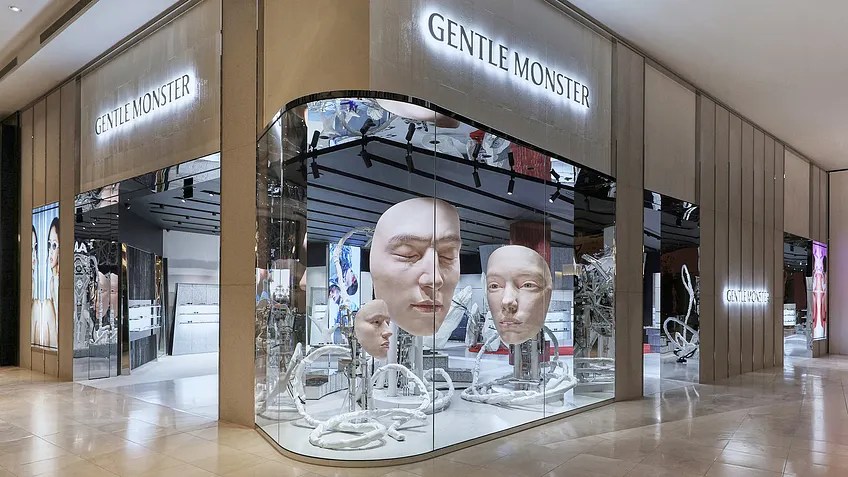
Gentle Monster, a Korean eyewear brand, provides another example. Its stores deliberately challenge conventional retail design. Its HAUS DOSAN concept, for example, was designed to remove many of the functions people normally expect from a retail environment and instead use installations, art and experimentation to create an experience distinctive to the brand.
Airbnb’s “Belong Anywhere” philosophy provides another way to think about the principle. The product experience has long extended beyond conventional hotel-style accommodation by allowing travellers to discover distinctive types of homes and experiences around the world.
The point is not that every brand needs an art installation or an unusual product feature. It is that the experience should emerge from both what customers need and what the brand uniquely stands for.
Brand-centred experiences can drive growth
There is also a commercial argument for doing this.
Kantar BrandZ research finds that brands perceived to deliver unique and meaningful experiences enjoy stronger growth. Across hundreds of thousands of measured brand touchpoints, Kantar reports that approximately 75% of brand-building impact comes from experience and word of mouth rather than paid marketing.
Kantar also found that brands with the strongest experiences are 2.5 times more likely to significantly grow market share than brands with weaker experiences.
The implication matters for designers and marketers. Customer satisfaction alone is not enough. Experiences also need to contribute to what makes the brand meaningfully different.
The case for brand-centred design
The unintended consequence of human-centred design is a sea of sameness.
Brands should be crafting distinctive ideas and solutions that reinforce their positioning throughout their products, services, advertising and broader customer experience.
Human-centred design does not need to disappear. Its understanding of people remains valuable. But customer understanding should be the input rather than the entire answer.
Brand strategy provides another necessary constraint.
The question should no longer simply be:
What does the customer need?
It should also be:
How would our brand uniquely solve that need?
Let’s make the brand the north star and commit to making brand-driven ideas that cannot simply be replicated by competitors.
It’s time for brand-centred design.
Sources
For this article, I would not dump a huge bibliography at the bottom. Keep it tight and use the primary sources behind the substantive claims:
Gentle Monster — HAUS DOSAN. Primary source for the retail example and its deliberate departure from conventional retail environments.
Gentle Monster HAUS DOSAN
Kantar — Three ways innovation can help you create a successful brand experience. Supports the 75% experience/word-of-mouth finding and the 2.5x market-share-growth finding.
Kantar research
Kantar — Unifying brand journeys: Where promise meets experience. Supports the argument that brand strength is primarily built through experiences and that those experiences should reflect brand positioning and meaningful difference.
Kantar research on brand journeys

